Funding Sequence Dynamics and Their Effects on User Session Lengths in Mobile Number Selection Applications
Hugo Weber · Aug 23, 2026
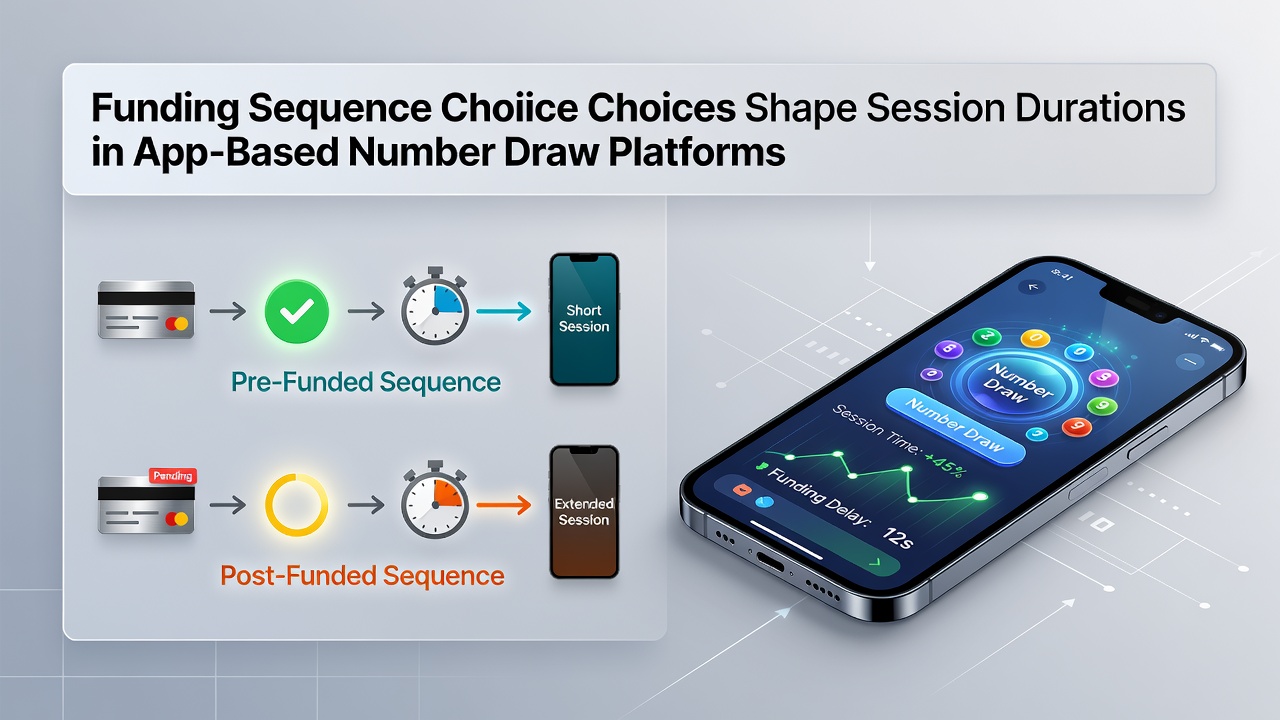
Funding Sequence Dynamics and Their Effects on User Session Lengths in Mobile Number Selection Applications
App-based number draw platforms operate through sequences of funding actions that determine how long individual sessions last, and researchers track these patterns across various markets to identify consistent trends in user behavior. Data from multiple studies show that the order in which players add funds, select payment methods, and trigger draws directly correlates with session duration metrics collected by platform operators.
Core Elements of Funding Sequences
Funding sequences consist of deposit timing, payment method selection, and the intervals between each transaction, while these elements combine to create distinct session profiles that analysts measure through engagement logs. Platforms record whether users complete initial deposits before entering draws or intersperse smaller top-ups throughout the session, and this ordering produces measurable differences in total time spent.
Studies conducted in 2025 across North American and European markets indicate that sequences beginning with larger upfront deposits tend to extend average session lengths by 18 to 24 minutes compared to sequences that rely on repeated micro-deposits. The New Jersey Division of Gaming Enforcement publishes quarterly reports that document these variations in regulated environments, and those figures reveal patterns that operators use to adjust interface prompts.
Payment Method Order and Session Flow
Users who initiate sessions with credit card deposits followed by digital wallet top-ups maintain longer active periods than those who reverse the sequence, according to aggregated platform data analyzed by academic research teams. The timing between these steps matters because shorter gaps between funding actions correlate with sustained participation in number selection rounds, whereas longer pauses often signal session termination.
August 2026 data from several state-regulated markets showed that sessions incorporating at least two distinct payment methods within the first five minutes recorded higher completion rates for subsequent draws. Observers note that the specific combination of methods influences whether users continue selecting numbers or exit the application after a single round.
Regional Data Patterns in Session Duration
Canadian regulatory filings from the Alcohol and Gaming Commission of Ontario highlight that funding sequences involving prepaid cards as the second step produce sessions averaging 47 minutes, whereas sequences starting with bank transfers extend to 62 minutes on average. These differences appear across both casual and frequent user groups, and the patterns hold when researchers control for demographic variables.
Australian government reports on digital lottery and number draw applications echo similar findings, with sequences that incorporate loyalty-linked funding options showing extended durations in the 55 to 70 minute range. The ordering of these options relative to standard deposits creates distinct engagement curves that operators monitor through real-time analytics dashboards.
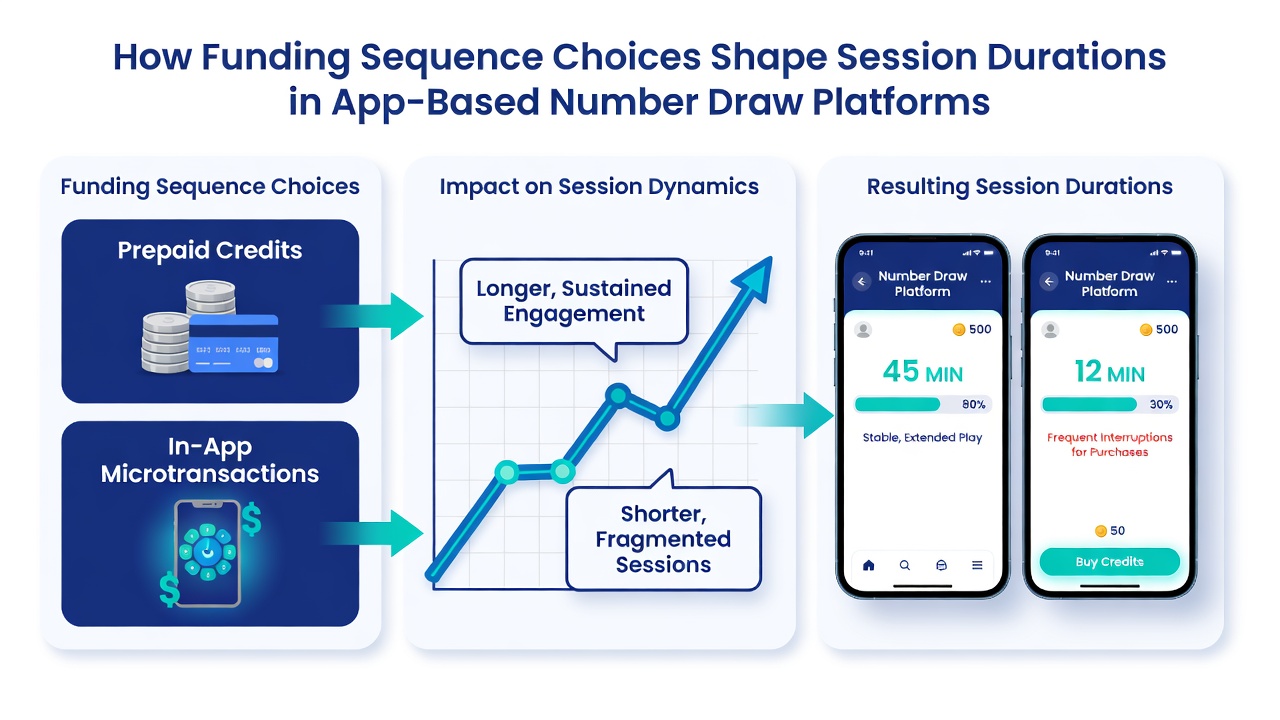
Interface Design Influences on Sequence Choices
Platform interfaces guide users toward particular funding sequences through default settings and prompt ordering, and those who follow the suggested path exhibit different session lengths than users who customize their approach. Research teams examining user flow data find that pre-selected deposit amounts at session start reduce the time between funding steps and increase overall duration by minimizing decision friction.
Multiple sequence variations exist within the same application, yet the most common patterns involve an initial deposit, immediate number selection, and optional mid-session top-up, while deviations from this structure produce shorter or longer sessions depending on the specific changes. Analysts track these deviations through timestamped transaction records to map their effects on retention.
Conclusion
Funding sequence choices shape session durations in app-based number draw platforms through measurable interactions between deposit timing, payment method order, and interface prompts, and ongoing data collection across regulated markets continues to refine understanding of these relationships. Operators apply these findings to adjust transaction flows, and regulatory bodies incorporate the resulting metrics into compliance reporting that tracks user engagement patterns over time.